


The Joy of Crafting: Why Making Things With Your Hands Is Good for the Soul
There is something wonderfully satisfying about making something with your own two hands.
Maybe it’s a lopsided knitted scarf, a handmade birthday card, a slightly wonky clay pot, or a painting that looked much better in your head. Whatever the result, crafting has a special kind of magic: you start with a handful of materials and finish with something that didn’t exist before.
And that feels pretty fantastic.
Crafting Is Older Than You Think
Long before craft stores filled their shelves with glitter, yarn, beads, and enough varieties of scrapbook paper to overwhelm even the most dedicated crafter, humans were making things.
Our ancestors crafted tools, baskets, clothing, pottery, jewelry, shelters, and decorations. These skills were essential for everyday life, but they were also ways of expressing creativity, identity, culture, and tradition.
As civilizations developed, crafts became increasingly specialized. Weaving, pottery, woodworking, metalworking, embroidery, and other skills were passed from generation to generation. Many traditional crafts still survive today, carrying stories and techniques that have been lovingly preserved for hundreds—or even thousands—of years.
In other words, your weekend crochet project is part of a very long human tradition.
No pressure!
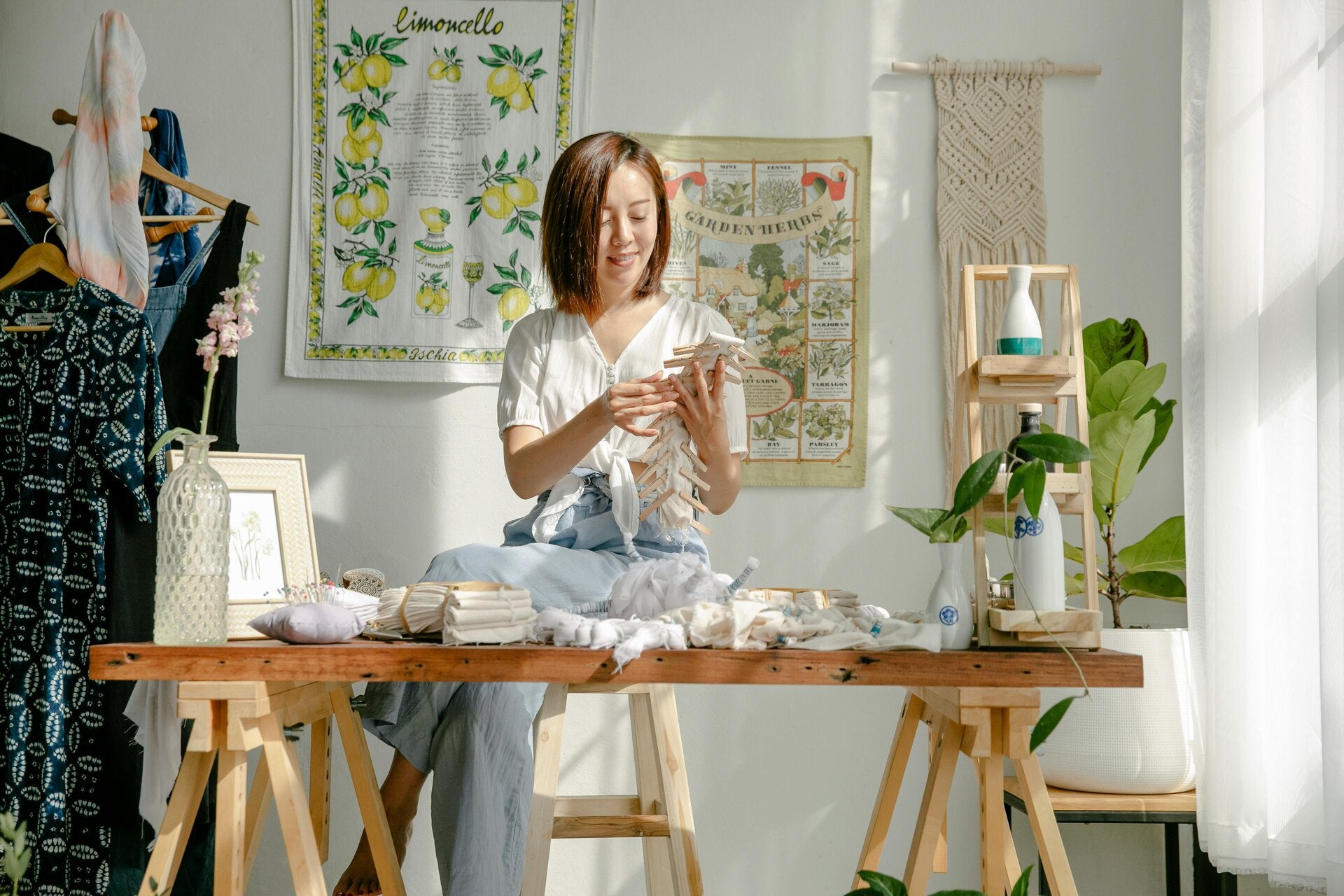
Why Does Crafting Feel So Good?
One of the best things about crafting is that it gives your brain a break from the endless buzz of modern life.
Emails? Ignore them.
Notifications? Later.
That mysterious list of things you were supposed to remember? It can wait.
When you're cutting paper, shaping clay, threading a needle, sanding wood, or painting a flower, your attention naturally moves toward what you're doing right now.
Crafting can become a form of mindfulness because it encourages us to slow down and focus on the process rather than worrying about what happened yesterday or what needs to happen tomorrow.
And there is something deeply satisfying about watching a project take shape one small step at a time.
The Happiness of Making Something
Crafting also gives us a wonderful little confidence boost.
You begin with:
“I have absolutely no idea what I'm doing.”
Then comes:
“Hmm... I think this is supposed to look like this.”
And eventually:
“LOOK WHAT I MADE!”
That sense of accomplishment matters.
Finishing a craft project gives us a tangible reminder that we can learn, experiment, make mistakes, and try again. Even when the final result isn't perfect, the process itself can feel rewarding.
And let's be honest: perfection is overrated.
A handmade object with a crooked stitch or slightly uneven edge has something a factory-produced object often doesn't—it has a story.
Crafting Can Help Us Unplug
We spend an extraordinary amount of time looking at screens. Crafting offers the delightful alternative of looking at something that isn't glowing.
There is something wonderfully old-fashioned about sitting down with a ball of yarn, a paintbrush, a needle, or a piece of wood and simply making.
You can listen to music or a podcast while you work, chat with friends, or enjoy the glorious sound of absolutely nothing.
Crafting doesn't demand that you multitask.
It simply asks you to make the next stitch.
Or the next brushstroke.
Or the next cut.
Creativity Doesn't Have to Be "Good"
One of the biggest joys of crafting is that you don't have to be an artist.
You don't need a degree in design.
You don't need expensive equipment.
You don't even need particularly good handwriting.
You just need curiosity.
Crafting gives us permission to experiment. Try a new color. Mix materials. Follow a pattern—or completely ignore it. Make something beautiful. Make something ridiculous. Make something that only makes sense to you.
There are no crafting police knocking on the door because your paper flower isn't botanically accurate.
Thankfully.

Crafting Brings People Together
Crafting may look like a solitary activity, but it has always had a social side.
Think knitting circles, quilting groups, sewing clubs, pottery classes, woodworking workshops, scrapbook gatherings, and community art projects.
People have gathered to make things together for generations.
And while hands are busy, conversations tend to flow.
Crafting can create opportunities to teach and learn from one another, share traditions, swap ideas, and make new friends. Sometimes the craft project becomes almost secondary to the stories and laughter that happen around the table.
The Joy of Giving Handmade
There is another wonderful benefit to crafting: handmade gifts feel personal.
A store-bought gift can certainly be thoughtful, but a handmade one often says:
“I spent my time making this especially for you.”
That might be a knitted hat, a painted picture, a batch of homemade decorations, a handmade card, or a carefully assembled scrapbook.
And even if the recipient doesn't fully appreciate how many hours went into it, the maker knows.
Every stitch, brushstroke, cut, and carefully chosen color represents time and attention.
That's a pretty special gift in a world where we are constantly rushing.
Crafting Is Good for the Planet, Too
Many crafts offer opportunities to reuse and repurpose things we already have.
Old clothes can become quilts.
Glass jars can become storage containers.
Scraps of fabric can become decorations.
Cardboard can become art.
Furniture can be repaired instead of replaced.
Crafting doesn't automatically make something sustainable, of course, but creative reuse can help us look at everyday objects differently.
Instead of asking, “How do I get rid of this?”
we might start asking,
“What could I make from this?”
That little change in perspective can be surprisingly powerful.
So, What Should You Make?
The answer is simple:
Whatever sounds fun.
Try painting if you want color.
Try knitting or crochet if you like repetition.
Try woodworking if you enjoy working with your hands.
Try pottery if you don't mind getting covered in clay.
Try paper crafts if you want something inexpensive and accessible.
Try sewing, embroidery, jewelry making, candle making, drawing, collage, gardening, or upcycling.
And if your first attempt looks nothing like the picture on the instructions?
Congratulations.
You've officially started crafting.

The Real Beauty of Crafting
Perhaps the greatest benefit of crafting isn't the finished object at all.
It's the time spent making it.
It's the quiet concentration.
The little burst of pride when something finally works.
The laughter when it spectacularly doesn't.
The memories created around a kitchen table.
The traditions passed from one generation to another.
The satisfaction of saying, “I made that.”
Crafting reminds us that we don't always have to consume something to enjoy it. Sometimes we can create.
In a world that moves incredibly fast, there is something wonderfully joyful about slowing down, picking up some materials, and making something simply because we can.
So grab the yarn.
Find the paintbrush.
Open that box of craft supplies you've been saving for the perfect project.
And start making.
You never know what you might create.
Add comment
Comments