

A Beginner’s Guide to Crochet: Everything You Need to Get Started
Have you ever seen a beautiful handmade blanket, a cute crocheted flower, or a cozy scarf and thought, “I wish I could make that!”? The good news is that you absolutely can. Crochet is a fun, creative, and rewarding hobby that anyone can learn with a little patience and practice.
Whether you dream of making handmade gifts, creating stylish accessories, decorating your home, or simply finding a relaxing activity to enjoy in your spare time, crochet is a wonderful place to start.
If you’re completely new to crochet, don’t worry! You don’t need expensive supplies or years of experience to create something beautiful. This beginner’s guide will walk you through everything you need to know, including where to buy yarn, how to find crochet patterns, which yarns are best for beginners, and simple tips to help you learn your first stitches.
Grab a cup of tea, get comfortable, and let’s get started!
What Is Crochet?
Crochet is a craft that uses a single hook and yarn to create fabric, patterns, and decorative designs. By pulling loops of yarn through other loops, you can make everything from simple dishcloths and scarves to intricate blankets, clothing, bags, and adorable stuffed animals.
One of the best things about crochet is its versatility. You can start with basic stitches and gradually work your way up to more detailed projects as your confidence grows.
Crochet is also a great way to unwind. Many people enjoy it because it gives their hands something creative to do while allowing them to relax, listen to music, or watch their favorite show.
And the best part? You can take your crochet projects almost anywhere!

What Do You Need to Start Crocheting?
You don’t need a huge collection of supplies to begin. In fact, you can start learning with just a few basic tools.
1. A Crochet Hook
Your crochet hook is the tool you use to pull yarn through loops and create stitches. Hooks come in different sizes and materials, including aluminum, plastic, bamboo, and ergonomic designs.
For beginners, a 5 mm or 5.5 mm crochet hook is a great starting point when paired with medium-weight yarn. Always check the yarn label and your pattern for the recommended hook size.
If you plan to crochet for longer periods, you may also enjoy an ergonomic hook with a comfortable handle.
2. Yarn
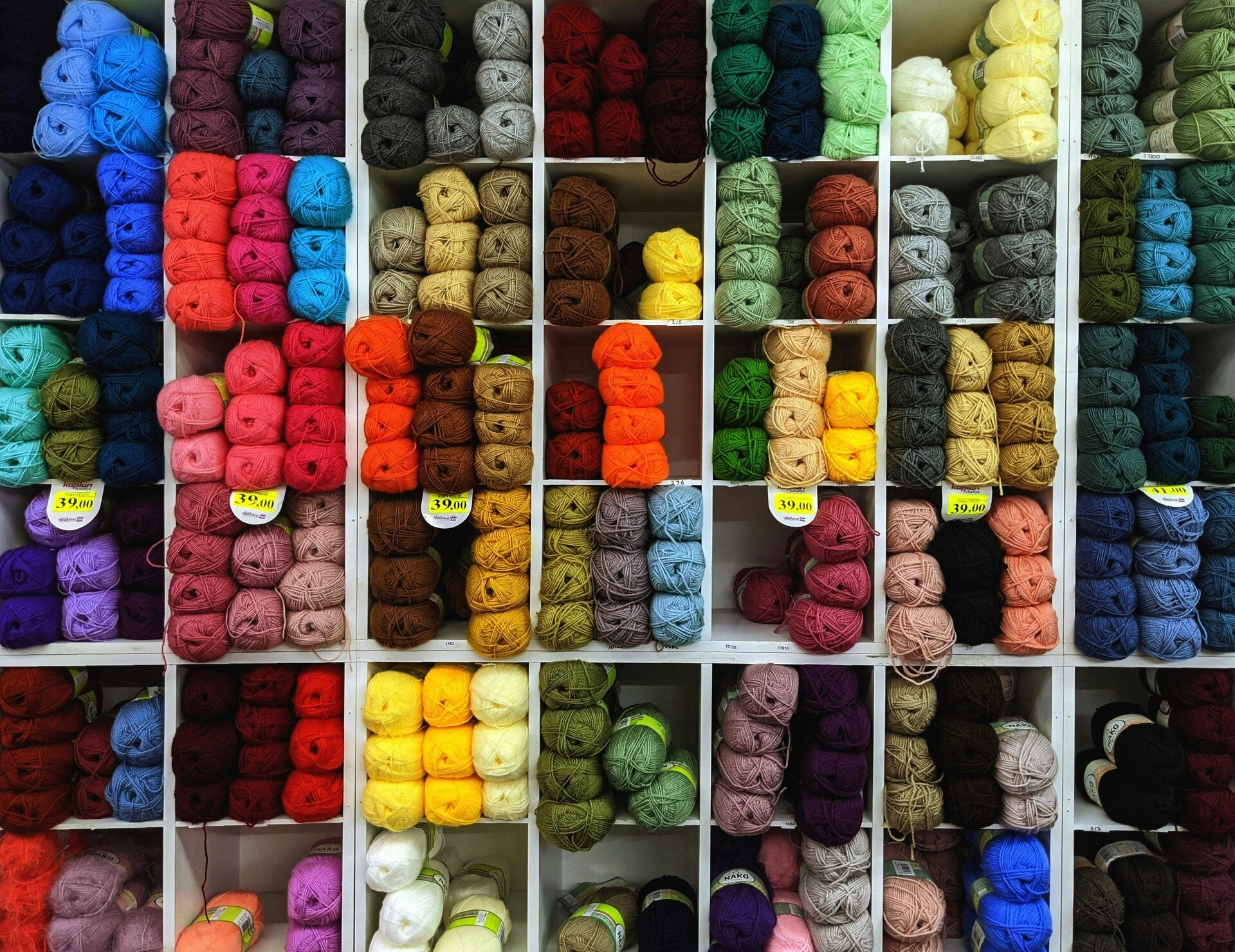
Yarn is available in countless colors, textures, thicknesses, and fibers. Choosing the right yarn can make learning much easier, so it's worth keeping things simple at first.
Look for a smooth, medium-weight yarn in a light, solid color. Cream, pale pink, light blue, and soft gray are all excellent choices because they make it easier to see your stitches.
3. Scissors
A small, sharp pair of scissors will help you cut your yarn neatly when finishing a project or changing colors.
4. Yarn Needle
A yarn needle, sometimes called a tapestry needle, has a large eye that allows you to weave loose yarn ends into your finished work.
5. Stitch Markers
Stitch markers help you keep track of where a row begins or where a particular stitch belongs. They are especially useful when making crochet in the round, such as hats and stuffed animals.
Beginner tip: You don't need to buy everything at once. Start with one hook, one ball of yarn, a pair of scissors, and a yarn needle. You can add more supplies as you learn.
Where to Buy Yarn for Crochet
One of the most exciting parts of learning crochet is shopping for yarn! There are so many colors and textures to choose from, and it’s easy to get carried away.
Here are some places to look for your first supplies.
Local Craft Stores
Craft stores are an excellent option for beginners because you can touch the yarn, compare colors, and read the labels before purchasing.
Popular places to shop in the United States include:
- Michaels: A wide selection of yarn, crochet hooks, beginner kits, and other crafting supplies.
- Hobby Lobby: Offers a variety of yarn brands, colors, and basic crochet tools.
- Walmart: A convenient option for affordable yarn and essential supplies.
Shopping in person is especially helpful when you're still learning which yarn textures you enjoy working with.
Online Yarn Shops
If you prefer shopping from home, online yarn stores offer a huge selection of colors, fibers, and specialty yarns.
Some places to explore include:
- Lion Brand Yarn: www.lionbrand.com
- Yarnspirations: www.yarnspirations.com
- WeCrochet: www.crochet.com
- LoveCrafts: www.lovecrafts.com
Online shopping is useful when you need a specific color or want to compare different yarn types. Just remember that colors can look slightly different on a screen than they do in person.
Thrift Stores and Craft Destash Groups
If you're trying to keep your hobby affordable, thrift stores, community craft swaps, and local destash groups can be great places to look for yarn.
You may find unused skeins, leftover yarn from another crafter's projects, or supplies someone no longer needs.
Check that the yarn is clean, dry, and in good condition before using it.
How Much Yarn Should You Buy?
For your first practice sessions, one ball of medium-weight yarn is usually enough. If you decide to make a scarf, blanket, or larger project, check the pattern's yarn requirements before buying supplies.
For projects requiring multiple balls, buying the same yarn color and dye lot can help prevent noticeable color differences.
What Is the Best Yarn for Beginners?
Choosing yarn can feel overwhelming because there are so many options. The good news is that you don't need the most expensive yarn to make beautiful crochet projects.
The best beginner yarn is generally smooth, easy to handle, affordable, and easy to see.
Here are some of the best options to consider.
1. Acrylic Yarn: Best Overall for Beginners
Acrylic yarn is one of the most popular choices for beginners because it is generally affordable, widely available, and easy to care for.
It comes in a huge variety of colors and is suitable for many projects, including scarves, blankets, hats, and bags.
A few popular options include:
- Red Heart Super Saver: A budget-friendly option for practice projects and blankets.
- Lion Brand Vanna's Choice: A soft, medium-weight acrylic option suitable for accessories and home projects.
- Brava Worsted by WeCrochet: A smooth acrylic yarn that works well for learning basic stitches.
Acrylic yarn is a great choice when you want to practice without worrying too much about the cost of making mistakes.
2. Cotton Yarn: Best for Dishcloths and Practical Projects
Cotton yarn is another excellent choice, especially when you want to make something useful.
Cotton has good stitch definition, making individual stitches easier to identify. It is commonly used for dishcloths, washcloths, tote bags, and summer accessories.
Cotton has less stretch than acrylic, so it can sometimes feel a little firmer to work with. However, it is worth trying once you become comfortable with the basics.
3. Wool Yarn: Best for Warm and Cozy Projects
Wool yarn is soft, warm, and naturally elastic, making it a popular choice for scarves, hats, mittens, and other winter accessories.
Some wool yarns can be more expensive than acrylic, and their care requirements vary. If you're interested in wool, look for a beginner-friendly blend and check the washing instructions before purchasing.
4. Cotton-Acrylic Blends: A Versatile Alternative
Cotton-acrylic blends combine some of the benefits of both fibers. Depending on the blend, they can offer a balance of softness, durability, and stitch definition.
They're worth considering for dishcloths, lightweight blankets, bags, and other everyday projects.
What Yarn Should Beginners Avoid?
While every yarn has its purpose, some varieties can make learning more difficult.
For your first project, try to avoid:
- Very dark yarn, especially black, because it can be difficult to see individual stitches.
- Fuzzy or eyelash yarn, which can hide the loops you need to work into.
- Very thin yarn, which creates small stitches that are harder to identify.
- Chenille or velvet yarn, which can make it challenging to see stitches and correct mistakes.
- Highly textured or multicolored yarn, which can make stitch counting more difficult.
You can absolutely experiment with these yarns later. For now, choose something simple that helps you see what you're doing.

Where to Find Crochet Patterns
Once you have your yarn and hook, it's time for the fun part: choosing your first project!
A crochet pattern is a set of instructions that tells you which stitches to use, how many to make, and how to assemble your finished piece.
You can find patterns in books, magazines, websites, videos, and downloadable guides.
Free Crochet Pattern Websites
If you're new to crochet, free patterns are a fantastic way to practice without spending extra money.
Here are a few places to explore:
- Yarnspirations: www.yarnspirations.com — Offers patterns for blankets, clothing, accessories, and home decor.
- Lion Brand Yarn: www.lionbrand.com — Features patterns for a variety of yarn weights and skill levels.
- LoveCrafts: www.lovecrafts.com — Offers a wide range of patterns, including beginner-friendly designs.
- Ravelry: www.ravelry.com — A large pattern database where you can explore crochet designs and filter by project type, difficulty, and other features.
- WeCrochet: www.crochet.com — Provides yarn, learning resources, and crochet patterns.
Some patterns are free, while others require payment. Always check the pattern details before downloading or purchasing.
YouTube Tutorials
YouTube is one of the most helpful resources for learning crochet because you can watch someone demonstrate each movement.
Search for tutorials such as:
- Crochet for absolute beginners.
- How to hold a crochet hook and yarn.
- How to make a slip knot and chain stitch.
- Single crochet stitch tutorial.
- Double crochet stitch tutorial.
- How to read a beginner crochet pattern.
Look for videos that show close-up hand movements, explain stitch placement clearly, and work at a comfortable pace.
Don't be afraid to pause, rewind, and repeat a step several times. That's part of learning!
Crochet Books and Beginner Kits
If you prefer having instructions in one place, a beginner crochet book can be a helpful investment.
Beginner kits are another convenient option because they often include yarn, hooks, patterns, and other basic supplies. Some kits also provide video tutorials.
Choose a kit that clearly states it is suitable for beginners and includes instructions you can follow comfortably.
How to Start Learning Crochet: A Step-by-Step Guide
Now that you have your supplies and know where to find patterns, let's walk through the first steps.
Step 1: Learn How to Hold Your Hook and Yarn
There isn't just one correct way to hold a crochet hook. Some people hold it like a pencil, while others hold it like a knife.
Try both methods and choose whichever feels more natural.
Your yarn hand controls the strand and helps maintain tension, while your hook hand guides the hook through the loops.
The most important thing is to keep your hands relaxed. Gripping too tightly can make crochet uncomfortable and cause your stitches to become too tight.
Step 2: Make a Slip Knot
Most crochet projects begin with a slip knot.
Create a loop with your yarn, pull a section of the working yarn through the loop, and place the new loop on your hook. Gently pull the yarn ends to adjust the loop around the hook.
The loop should be secure but loose enough for your hook to move freely.
Don't worry if it takes a few tries. This movement becomes much easier with practice.
Step 3: Practice the Chain Stitch
The chain stitch is the foundation of many crochet projects.
To make a chain:
- Start with your slip knot on the hook.
- Wrap the working yarn over your hook. This is called a yarn over.
- Pull the yarn through the loop already on your hook.
- Repeat until you have the desired number of chains.
Try making a chain of 10 to 15 stitches.
Your first chain might look uneven, and that's perfectly normal. Focus on keeping your loops loose enough for your hook to move through them.
Step 4: Learn the Single Crochet Stitch
Single crochet is one of the basic stitches you'll use in many beginner patterns.
After making your chain, insert your hook into the appropriate chain stitch, yarn over, and pull up a loop. Yarn over again and pull through both loops on your hook.
Congratulations! You've made a single crochet stitch.
Repeat this movement across the row. Once you reach the end, follow your tutorial's instructions for turning your work and starting the next row.
Step 5: Try the Double Crochet Stitch
Double crochet is another essential stitch. It creates a taller fabric than single crochet and is often used for scarves, blankets, and clothing.
To make a double crochet, yarn over before inserting your hook into the stitch. Pull up a loop, yarn over and pull through two loops, then yarn over again and pull through the remaining two loops.
Practice until the movement starts to feel comfortable.
Step 6: Practice Turning and Counting Stitches
Turning at the end of a row allows you to crochet back across your work.
Depending on the stitch and pattern, you may need to make one or more turning chains before beginning the next row.
Counting stitches is important because beginners often accidentally add or skip stitches at the edges. Use stitch markers if necessary, and count each row as you go.
Step 7: Make Your First Small Project
Once you can make chains and basic stitches, choose a simple project.
A dishcloth, small square, or basic scarf is an excellent first project because it allows you to practice repeating the same movements.
Your first project doesn't have to be perfect. The goal is to become familiar with your hook, yarn, and stitches while enjoying the process.

Easy Crochet Projects for Beginners
Not sure what to make first? Start with a project that uses only one or two basic stitches.
Here are some ideas to inspire you.
1. A Simple Crochet Dishcloth
A dishcloth is a wonderful first project, particularly when using cotton yarn.
You can make a rectangular piece using rows of single crochet or half double crochet. It's practical, small, and gives you plenty of opportunities to practice keeping your stitches even.
2. A Basic Scarf
A scarf is perfect for practicing rows and building consistency.
Choose a soft acrylic yarn in your favorite color and a simple pattern that uses single crochet or double crochet.
You can add stripes or a fringe once you're comfortable with the basics.
3. Granny Squares
Granny squares are small crocheted squares that can be joined to create blankets, bags, pillows, and clothing.
They are a fun way to practice working in the round, making clusters of stitches, and changing colors.
Choose a beginner granny square pattern with photos or video instructions to help you follow each round.
4. A Crochet Headband
A simple headband is a quick, useful project that can help you practice working in rows and creating a consistent fabric.
You can experiment with different widths and colors once you feel confident.
5. A Small Crochet Pouch
A small pouch is another fun option for practicing basic stitches and learning how to shape and finish a project.
You can add a button or simple drawstring after you become comfortable with the basic construction.
My recommendation: Start with a dishcloth or small square before attempting a complicated blanket or stuffed animal. Small projects help you learn the basics without feeling overwhelmed.
Crochet Tips and Tricks Every Beginner Should Know
Learning crochet takes time, but a few simple habits can make the experience much easier.
1. Keep Your Tension Relaxed
Tension refers to how tightly or loosely you hold your yarn while crocheting.
If your stitches are too tight, your hook may struggle to enter them. If they're too loose, your finished work may have large gaps.
Try to keep your grip relaxed and let the yarn move naturally through your fingers. Consistency matters more than achieving perfect tension right away.
2. Choose Light-Colored Yarn
Light-colored yarn makes it easier to see the individual loops and identify where your hook should go.
Once you can recognize your stitches confidently, experiment with darker colors and different textures.
3. Count Your Stitches
If your project keeps getting wider or narrower, you may be accidentally adding or skipping stitches.
Count your stitches at the end of each row, especially during your first few projects.
Stitch markers can also help you identify the first and last stitches in a row.
4. Don't Be Afraid to Undo Your Work
Crocheters often use the term "frogging" to describe pulling out stitches to correct a mistake.
If you notice an error, it's perfectly fine to unravel a few stitches and try again. Making mistakes is part of learning, even for experienced crocheters.
Take your time, identify what went wrong, and keep practicing.
5. Practice a Little Every Day
You don't need to spend hours crocheting to improve.
Even 10 to 20 minutes of practice can help you become more familiar with your hook and stitches. Consistent practice is often more useful than trying to learn everything in one long session.
6. Use Stitch Markers Early
Stitch markers aren't just for advanced projects. They can help you keep track of row edges, stitch counts, and the beginning of a round.
They are particularly helpful when you're still learning to recognize individual stitches.
7. Read the Yarn Label
Yarn labels provide useful information, including fiber content, yarn weight, recommended hook size, and care instructions.
Checking the label before starting a project can help you choose suitable materials and avoid surprises when washing your finished work.
8. Take Breaks
Crochet should be enjoyable, not uncomfortable.
If your hands, wrists, or shoulders feel tense, put your project down and take a break. Relax your grip, adjust your posture, and make sure you're working in a comfortable position.
9. Don't Compare Your First Project to Someone Else's Tenth
It's easy to look at beautiful crochet projects online and feel like your own work isn't good enough.
Remember that experienced crocheters have spent time learning their skills. Your first project is about practice, not perfection.
Every stitch you make is helping you improve.
Common Beginner Crochet Mistakes and How to Fix Them
Almost every new crocheter experiences a few frustrating moments. Here are some common problems and how to handle them.
Problem: My project keeps getting wider.
You may be accidentally adding stitches at the ends of your rows. Count each row and pay close attention to where your final stitch belongs.
Problem: My project keeps getting narrower.
You may be skipping the first or last stitch in a row. Stitch markers can help you identify the edges of your work.
Problem: My stitches are too tight.
Try relaxing your grip and allowing a little more yarn to move through your fingers. If necessary, experiment with a slightly larger hook, while keeping your pattern requirements in mind.
Problem: I can't tell where to insert my hook.
Try using smooth, light-colored yarn and good lighting. Look for the small V-shaped loops along the top of your stitches.
Problem: My edges look uneven.
Uneven edges are common when you're learning to count stitches and turn your work. Slow down, count each row, and mark the first and last stitches.
Problem: My yarn keeps splitting.
Your hook may be catching individual strands instead of the entire yarn. Try a smooth, tightly twisted yarn and adjust the angle at which you insert your hook.
Remember, you don't have to fix every little imperfection. Sometimes the best thing you can do is finish the project and use what you've learned next time.

How to Read a Crochet Pattern
At first, crochet patterns can look like a different language. Many use abbreviations to keep the instructions short.
Here are some common US crochet abbreviations you'll encounter:
- ch: Chain
- sl st: Slip stitch
- sc: Single crochet
- hdc: Half double crochet
- dc: Double crochet
- st(s): Stitch or stitches
- rep: Repeat
- rnd: Round
- FO: Finish off
A pattern may also include instructions in parentheses, brackets, or asterisks to show which stitches to repeat.
Always read the pattern's notes before starting, because abbreviations and terminology can vary between designers and countries. In particular, US and UK crochet patterns use different names for some stitches.
If you're confused by a pattern, look for a video tutorial or photo guide that demonstrates the same stitch.
How to Build Your Crochet Skills
Once you've learned the basic stitches, you'll have plenty of opportunities to explore new techniques.
Here is a simple progression you can follow:
Week 1: Learn the basics. Practice slip knots, chain stitches, single crochet, and counting rows.
Week 2: Build consistency. Make a dishcloth or a small square using repeated rows of basic stitches.
Week 3: Explore new stitches. Try half double crochet, double crochet, and simple textured patterns.
Week 4: Complete a small project. Choose a scarf, headband, granny square, or simple pouch.
You can follow this timeline at your own pace. Some people pick up crochet quickly, while others need more time to become comfortable with the movements.
There's no deadline, and you don't need to master every stitch before starting a project you love.
How to Make Crochet an Affordable Hobby
Crochet can be as inexpensive or as elaborate as you want it to be.
If you're working with a budget, start with a basic hook and one or two affordable balls of yarn. Use free patterns and online tutorials before purchasing books, courses, or specialty tools.
You can also:
- Use leftover yarn for small projects.
- Look for sales on yarn and crochet supplies.
- Borrow tools from a friend or family member.
- Join local crochet groups to learn from others.
- Save yarn scraps for colorwork or small decorative projects.
Avoid buying large quantities of yarn before you know what you enjoy making. As your skills develop, you'll have a better idea of which fibers, colors, and tools are worth investing in.
Final Thoughts: Enjoy Your Crochet Journey
Learning to crochet is a wonderful opportunity to be creative, develop a new skill, and make things with your own hands.
You don't need fancy supplies, expensive yarn, or perfect stitches to get started. All you need is a crochet hook, a ball of yarn, a little patience, and the willingness to learn.
Start small, practice your basic stitches, explore free patterns, and celebrate each finished project. Before long, the movements that once felt awkward will begin to feel natural, and you'll discover just how many beautiful things you can create.
Most importantly, remember that crochet is supposed to be enjoyable. Take your time, experiment with colors, embrace the occasional mistake, and have fun making something uniquely yours.
Ready to pick up your first crochet hook? Choose a light-colored ball of yarn, find a beginner video tutorial, and practice your first chain today. Your crochet journey starts with one loop!
Happy crocheting!
Add comment
Comments