


So, you’ve made a few wire-wrapped pieces.
Then a friend bought one.
Then another friend asked if you could make her one “but in blue.”
And suddenly your relaxing little jewelry hobby has started looking suspiciously like a business.
Good news: it can be!
Wire-wrapped jewelry is a wonderfully creative hobby to monetize because every piece has that handmade, one-of-a-kind magic that mass-produced jewelry simply can’t copy. Whether you make gemstone pendants, rings, earrings, bracelets, or elaborate statement pieces, there are plenty of ways to turn those happy hours spent wrapping wire into extra income.
The trick is to treat your hobby like a business without sucking all the fun out of it.
Let’s get into it.
1. Start With What Makes Your Jewelry Special
Before you worry about logos, websites, or spreadsheets that make you question all your life choices, figure out what makes your jewelry different.
Maybe you love using unusual stones. Maybe your style is earthy and bohemian. Maybe you create delicate minimalist pieces. Maybe your wire wrapping is elaborate enough to make people wonder whether tiny fairies helped.
Your style is part of your brand.
You don't need to appeal to everyone. In fact, trying to make jewelry for everyone can make your shop feel a little like a craft-store buffet.
Instead, think about:
-
What colors do you naturally gravitate toward?
-
What types of stones do you love working with?
-
Is your style rustic, elegant, whimsical, gothic, minimalist, nature-inspired, or something else?
-
What kind of person would be excited to wear your creations?
💡 Tip: Create a “signature”
Choose a few elements that show up regularly in your work—perhaps a particular wrapping technique, stone shape, metal color, or design detail. When someone sees your jewelry, you want them to think, “Oh! That looks like something they make.”
2. Figure Out What Your Jewelry Actually Costs
This is where many new jewelry sellers get into trouble.
You make a gorgeous pendant, look at the materials, and think:
“It's probably worth $20.”
Except you forgot the two hours you spent making it.
And the packaging.
And the wire.
And the tools.
And the little business card.
And the twelve trips across the room because you kept dropping the tiny jump ring.
Your pricing needs to account for more than just the gemstone.
Start by calculating your materials cost.
Include things like:
-
Gemstones
-
Wire
-
Chains
-
Clasps
-
Ear wires
-
Jump rings
-
Beads
-
Packaging
-
Labels or cards
-
Other supplies used to create the piece
Then account for your labor.
You don't necessarily have to pay yourself a huge hourly rate when you're starting, but you should establish a reasonable rate for your time.
For example:
Materials: $8
2 hours of labor at $20/hour: $40
Packaging and overhead: $4
Base cost: $52
From there, you'll need to add a profit margin appropriate to how and where you're selling.
And remember: your price doesn't have to be identical to another maker's price. Their materials, experience, audience, production time, and business expenses may be completely different from yours.
💡 Tip: Time yourself
For your next 5–10 pieces, keep track of how long each one actually takes. You may discover that your “quick little pendant” is actually a two-hour production involving 47 tiny decisions.
That information is gold when you're pricing.
3. Don't Forget About the Invisible Costs
Running a jewelry business comes with sneaky little expenses that have a habit of hiding in the bushes.
Photography takes time.
Selling platforms may charge fees.
Markets may have booth fees.
Shipping supplies cost money.
Your tools wear out.
You may have to replace a spool of wire you somehow managed to turn into a spectacular metal bird's nest.
These expenses are part of doing business.
Create a simple list of your recurring costs and factor them into your pricing strategy.
💡 Tip: Keep business money separate
Even if you're starting small, consider keeping a simple record of your jewelry income and expenses. A basic spreadsheet can be enough.
Track:
Money in: sales
Money out: supplies, fees, packaging, shipping, marketing, equipment, etc.
You'll thank yourself later.
4. Decide Where You Want to Sell
You have options!
And you don't need to launch on every platform simultaneously. In fact, please don't.
Trying to maintain five social media accounts, an online shop, a craft-fair schedule, a newsletter, and a website while also making jewelry can turn your relaxing hobby into a full-time job you didn't apply for.
Start with one or two sales channels.
You might sell through:
-
An online handmade marketplace
-
Your own website
-
Social media
-
Local craft fairs
-
Art markets
-
Boutique or consignment shops
-
Jewelry parties or pop-up events
-
Custom orders
-
Local community events
Think about where your ideal customers already shop.
💡 Tip: Test before you commit
Try one selling method for a few months and see what happens.
Do people buy?
Do they ask questions?
Which pieces get attention?
What price points seem to work?
Treat the first few months as research—not a final exam.
5. Take Photos That Make People Stop Scrolling
Your jewelry may look absolutely spectacular in person.
Unfortunately, the internet cannot smell your enthusiasm.
Your photos have to do the selling.
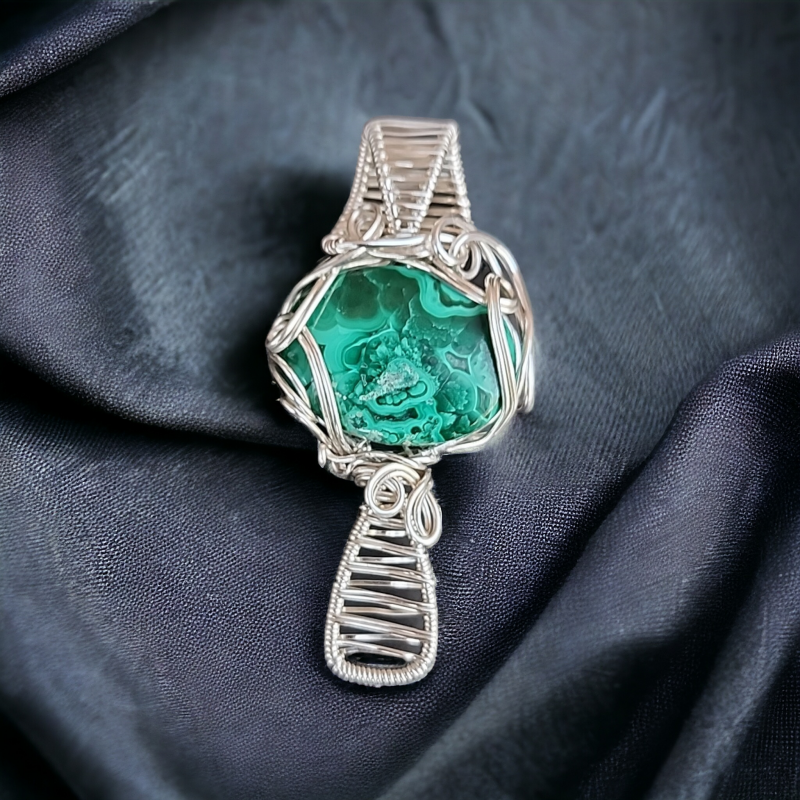
You don't need a fancy camera to get started. A smartphone, natural light, and a clean background can work beautifully.
Try photographing each piece:
-
From the front
-
At an angle
-
Being worn
-
Next to a familiar object for scale
-
Close up to show the wirework and stone details
Natural window light is your friend.
Your kitchen table covered in yesterday's coffee mug, receipts, and a rogue sock? Not so much.
💡 Tip: Show the details
Wire wrapping is a handmade art form. Don't hide the part that took you forever!
Take close-up photos of intricate wrapping, interesting stones, textures, and little design details.
Those imperfections and details can actually help communicate that your jewelry was made by a person, not a machine.
6. Tell the Story Behind the Jewelry
People don't just buy jewelry.
They buy gifts.
They buy memories.
They buy something that reminds them of a place, a person, a feeling, or simply the fact that they deserve something pretty.
Your product descriptions should tell that story.
Instead of:
“Wire-wrapped amethyst pendant.”
Try explaining what makes the piece interesting.
Describe the color, shape, texture, inspiration, and craftsmanship. Explain what kind of chain comes with it, how large it is, and what materials you used.
You can also share the story behind the design.
Maybe the shape was inspired by vines in your garden. Maybe you found the stone while traveling. Maybe you created the piece because you wanted something that looked like treasure from a fantasy novel.
Those details give customers something to connect with.
💡 Tip: Give your pieces names
“Amethyst Necklace #14” works.
“Moonlit Garden Amethyst Pendant” is much more fun.
7. Promote Without Feeling Like You're Yelling, “BUY MY STUFF!”
Promotion doesn't have to mean posting a product photo every day with a giant imaginary megaphone.
Your social media can be about the process, not just the finished product.
Share:
-
Behind-the-scenes videos
-
Your workspace
-
New stones you've purchased
-
Time-lapse wrapping videos
-
Before-and-after shots
-
Packaging orders
-
Jewelry-making tips
-
Your favorite tools
-
Design experiments
-
Pieces that didn't quite work
-
Customer photos, with permission
-
Stories about your inspiration
People love seeing how handmade things come together.
💡 Tip: Use the 80/20 idea
As a general content approach, try making most of your content interesting, entertaining, educational, or personal, with a smaller portion focused directly on selling.
For example:
“Here's how I turn a rough stone into a pendant” feels like content.
“Here is the pendant I made from that stone—it's available in my shop” turns that content into an opportunity to buy.
8. Make Videos of the Wrapping Process
This one deserves its own section because wire wrapping is perfect for video.
There is something ridiculously satisfying about watching a messy pile of wire become a beautiful pendant.
You don't need to create elaborate productions.
Set up your phone, hit record, and capture a short portion of the process.
You can make:
-
Quick wrapping demonstrations
-
Time-lapse videos
-
“Watch me make this” clips
-
Stone-to-jewelry transformations
-
Satisfying finishing shots
-
Packaging videos
💡 Tip: Keep it short
You don't need to document the entire three-hour saga.
Show the interesting bits.
Cut.
Wrap.
Twist.
Shape.
Polish.
Reveal.
Ta-da!
9. Try Custom Orders—But Set Boundaries
Custom jewelry can be a great way to make sales because customers love getting something made specifically for them.
But custom work can also become the place where your sanity goes to take a little vacation.
“I'd like the same necklace, but with a different stone, different wire, a different shape, a different chain, and can you make it look exactly like the one in this photo?”
Before accepting custom orders, decide:
-
What you're willing to customize
-
What you won't customize
-
How many revisions are included
-
Your turnaround time
-
Your deposit/payment policy
-
What happens if the customer changes their mind
💡 Tip: Charge appropriately for custom work
Custom pieces often take more communication, planning, experimentation, and design time than ready-made jewelry.
Your pricing should reflect that.
“Custom” should not mean “free design consultation with complimentary existential crisis.”
10. Get Your Jewelry Into the Real World
Online sales are fantastic, but handmade jewelry can be especially fun to sell in person.
Look for:
-
Craft fairs
-
Holiday markets
-
Art walks
-
Local festivals
-
Handmade markets
-
Community events
-
Boutique pop-ups
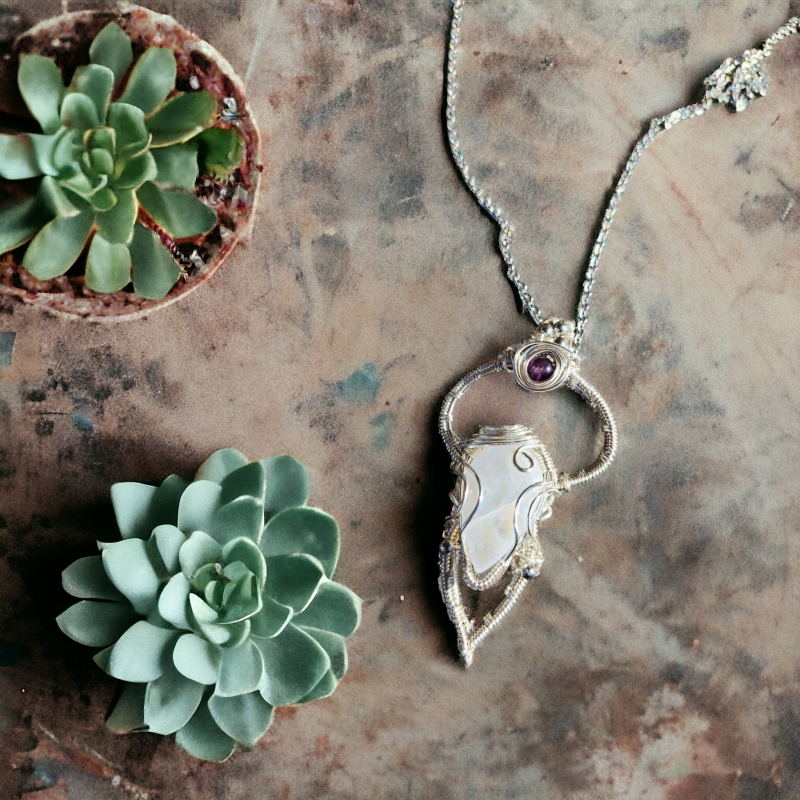
People love picking up a piece, examining the stone, seeing the wirework, and trying it on.
💡 Tip: Create different price points
Don't bring only your most elaborate $150 statement pieces.
Have a range of prices so shoppers can find something that fits their budget.
You might offer:
Small: simple earrings or rings
Medium: pendants and bracelets
Statement: elaborate or one-of-a-kind pieces
That gives customers multiple ways to become fans of your work.
11. Turn Customers Into Repeat Customers
Your first sale is exciting.
Your tenth sale is exciting.
But a customer who comes back three or four times?
That's business magic.
Make the buying experience memorable.
Beautiful packaging helps. A handwritten thank-you note can help. Including information about how to care for the jewelry can be useful.
You can also let previous customers know when you release new collections.
💡 Tip: Build a customer list
If appropriate and with permission, invite customers to join your email list so you can tell them about new collections, special events, or upcoming markets.
Social media algorithms can change.
An email list gives you a more direct way to stay connected with people who already like your work.
12. Make Collections Instead of Random Pieces
Instead of creating 30 completely unrelated pieces, try building small collections.
For example:
Forest Collection
Mossy greens, earthy stones, leaf-inspired designs.
Moon Collection
Silver wire, dark stones, celestial shapes.
Sunset Collection
Warm oranges, reds, yellows, and gold tones.
Collections make your shop feel intentional and give customers a reason to browse.
💡 Tip: Create mini launches
Rather than adding one piece whenever you finish it, save several pieces and release them together.
You can build anticipation by showing sneak peeks beforehand:
“Something sparkly is coming Friday…”
Now your followers have a reason to come back.
13. Don't Let Your Hobby Become a Joyless Factory
This might be the most important tip of all.
You started making wire-wrapped jewelry because you enjoyed it.
Don't accidentally turn your favorite hobby into a production line that makes you want to throw your pliers into the woods.
Set realistic production goals.
Give yourself permission to experiment.
Make pieces that aren't for sale.
Try weird designs.
Use that beautiful stone you've been hoarding for six months.
And remember that not every piece needs to become a product.
💡 Tip: Keep a “just for fun” box
Have a stash of materials reserved for projects that don't have to make financial sense.
No customer.
No deadline.
No pricing spreadsheet.
Just you, some wire, and whatever strange idea wandered into your brain that afternoon.
14. Keep Improving Your Pricing
Your prices aren't carved into stone tablets.
As your skills improve, your designs become more complex, your audience grows, and your costs change, your pricing can change too.
Review your prices periodically.
Ask yourself:
-
Am I covering my material costs?
-
Am I paying myself for my time?
-
Am I accounting for business expenses?
-
Am I making enough profit to make this worthwhile?
-
Are my prices consistent across similar pieces?
-
Have my materials become more expensive?
-
Am I underpricing because I'm uncomfortable charging for handmade work?
That last one is a biggie.
Handmade does not mean cheap.
Your customers aren't only paying for a gemstone and a piece of wire. They're paying for your skill, creativity, time, design decisions, and the fact that you made something with your own two hands.

15. Remember: You're Building a Brand, Not Just Selling Jewelry
Your jewelry business doesn't have to look like everyone else's.
Maybe you're the person who makes whimsical woodland pendants.
Maybe you're known for giant statement rings.
Maybe your thing is tiny minimalist pieces.
Maybe you make jewelry inspired by fantasy, mythology, nature, architecture, or absolutely anything else that makes your creative brain happy.
Lean into it.
Your personality, style, craftsmanship, photography, packaging, stories, and customer experience all become part of your brand.
And that's what can turn a simple hobby into something people remember.
Ready to Turn the Pliers Into Profit?
You don't need 500 pieces of inventory.
You don't need a giant studio.
You don't need a perfect logo.
And you definitely don't need to know everything before you begin.
Start small.
Make a few pieces.
Price them thoughtfully.
Take good photos.
Tell your story.
Share your process.
See what people respond to.
Then learn, adjust, and keep going.
Because that little pile of wire and pretty stones sitting on your craft table?
It might just be more than a hobby.
It might be the beginning of your next creative adventure—with a little extra money in your pocket along the way.
Add comment
Comments